

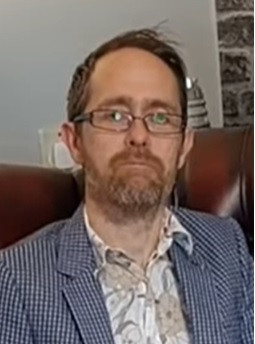
Dr Dan Stratton
Lecturer In Biomedical Health Sciences
School of Life, Health & Chemical Sciences
Biography
Professional biography
Degrees and professional qualifications
PhD Immunology (2013)
BSc (Hons) Biochemistry (2007)
SFHEA (2022)
FHEA (2014)
Brief Biography
Research Impact and Innovation
Mechanisms of Intercellular Communication
Developing the understanding of cell identity and tissue remodelling by investigating the role of extracellular vesicles (EVs) in systemic communication. My lab identifies how specific EV cargoes including miRNAs, lncRNAs, and proteins, act as epigenetic modulators to control cell fate and phenotype.
I work collaborately with national and international groups on a variety of projects involving cell communication and infection, cancer and prognosis.
Oncology & Gerontology
Investigating molecular signalling by EV mediated drivers of neuroendocrine cancer (NEPC in particular) development. Simultaneously, my lab explores longevity science, establishing how vesicle signalling directs health span in model organisms, offering potential pathways for therapeutic intervention in age related disease.
Advanced Methodologies
Developing the use of 3D tissue culture models (Spheroids and Tumouroids) to characterise the propagation of cell signals across complex tissue structures. This approach moves beyond traditional 2D limitations to provide a physiologically relevant data of how EV controlled signals influence whole tissue homeostasis, pathology and microenvironments.
Academic Leadership and Pedagogy
Leveraging over 16 years of academic expertise to design and lead multi-disciplinary curricula across immunology, biochemistry, and molecular biology. As the manager of the 3rd-year Lab School, I bridge the gap between theory and practice, equipping the next generation of scientists with high level technical competencies in protein and RNA lab practice and research.
Collaborative Synergy
Driving scientific progress through high impact partnerships across the Open University and international research institutes. I encourage a culture of knowledge exchange that translates complex scientific concepts into accessible, exciting learning opportunities for students and colleagues.
LHCS Research Plan committee (2026 - to date)
Research interests
Research Clusters
Cancer Research
Research Interests
Cell communication, Extracellular Vesicles (EVs), prognostics, RNA, tissue modelling/ageing and affimer design for cell communication and control.
Current research projects include examining EVs from Neuroendocrine Prostate Cancer in Hypoxic conditions. Examining Extra Low-Frequency Magnetic Fields effects as a potential cancer therapeutic treatment. EVs to modulate the Immunological response and tumour progression.
My lab is keen to collabororate on these types of research projects.
I am able to supervise research projects that align with my labs interests as a part of the ILESLA programme.
https://research.open.ac.uk/news/new-doctoral-programme-global-life-and-environmental-challenges?nocache=67505ff1c9d24
I welcome any emails to enquire about projects or propose an idea.
Teaching interests
Lecturer in Biomedical Health Sciences
Production/ Presentation;
SK190 Body in Balance
SDK100 Health and Science
SK297 Infection, Immunity and Public Health
SS022 Level 2 Lab School Microbiology and RNA
SS032 Level 3 Lab School, Protein and RNA
S291 Clinical Laboratory Diagnosis
SXS023/24/25 Biomedical Lab Schools
Post Graduate Supervision, Megan O'Neill doctoral researcher (Primary Supervisor PhD Student) and Gabriella Bachynskyj-Bilas.
Impact and engagement
Academic consultant for BBC2 Forensic - The Real CSI (2022 to 2026)
Pint of Science (19th May 2019) ‘A brief guide to microvesicles’
Café Scientific (Sept 2019) The importance of science in forensic science (DNA)
BBC radio Humberside Breakfast Show (27th September 2018) ‘Forensic science’
Sao Paulo Extracellular Vesicle workshop with invited talk, ‘Characterization of microvesicles' (2016)
Biomedical Sciences External Seminar Series, School of Life Sciences, The University of Hull (June 2017) ‘Microvesicles and cancer’.
London Extracellular Vesicle meeting (Feb 2017) ‘Using ELFMFs to generate MVs’.
Imperial University, Department of Chemical Biology and Biophysics (Oct 2013) ‘The joy of microvesicles’.
Gothenburg University, 1st ISEV conference (2012) ‘Microvesicle subtypes biochemistry and physiology differ depending upon stimuli’.
Papers and Articles
Dan Stratton (2026) Vaccines have been so successful that some people have forgotten why we need them. The Conversation.
Bachynskyj-Bilas G, Otto DJ, Stratton D, Rietdorf K, Johnson DM, McMullen CJ. The role of extracellular vesicles in cell-cell crosstalk in cardiotoxicity. J Physiol. 2026
Mannaperuma, D., Stratton, D., Lange, S., and Inal, J. M., (2025) Extracellular Vesicles from the Myocyte Secretome Contribute In Vitro to Creating an Unfavorable Environment for Migrating Lung Carcinoma Cells. Biology, 14 (11), 1578
Dan Stratton (2025) From monkey glands to 'young blood': the long, strange history of chasing immortality through transplants. The Conversation.
Ansa-Addo EA, Pathak P, McCrossan MV, Volpato Rossi I, Abdullahi M, Stratton D, Lange S, Ramirez MI, Inal JM. Monocyte-derived extracellular vesicles, stimulated by Trypanosoma cruzi, enhance cellular invasion in vitro via activated TGF-β1. J Extracell Vesicles. 2024 Nov;13(11):e70014.
Jorfi, S., Ansa-Addo, E., Mariniello, K., Warde, P., Senian, A. A. B., Stratton, D., Bax, B. E., Levene, M., Lange, S. and Inal, J. M. (2023) A coxsackie B1-mediated nonlytic Extracellular Vesicle-to-cell mechanism of virus transmission and its possible control through modulation of EV release, J Gen Virol, 104(9)
De Sousa, K. P., Rossi, I., Adbullahi, M., Ramirez, M. I., Stratton, D. and Inal, J. M. (2022) Isolation and characterization of extracellular vesicles and future directions in diagnosis and therapy, Nanobiotechnol.
Stratton, D., Malibha-Pinchbeck, M., Inal, J, (2022) Extra Low-Frequency Magnetic Field regime significantly enhances the cytotoxicity of methotrexate through transiently induced plasma membrane pores, Submitted BBRC
Antwi-Baffour, S., Malibha-Pinchbeck, M., Stratton, D., Jorfi, S., Lange, S. and Inal J., (2020) Plasma mEV levels in Ghanain malaria patients with low parasitaemia are higher than those of healthy controls, raising the potential for parasite markers in mEVs as diagnostic targets, JEV, 9:1, 1697124
Sellami M, Gasmi M, Denham J, Hayes LD, Stratton D, Padulo J, Bragazzi N., (2018) Effects of Acute and Chronic Exercise on Immunological Parameters in the Elderly Aged: Can Physical Activity Counteract the Effects of Aging? Front Immunol. 10;9:2187. doi: 10.3389/fimmu.2018.02187. PMID: 30364079; PMCID: PMC6191490.
Elliot, B., Herbert, P., Sculthorpe, N., Grace, F., Stratton, D. and Hayes, L., (2017) Lifelong exercise, but not short-term high-intensity Interval Training, Increases GDFII, Marker of Successful Aging, Physiol. Reports, Vol. 5, pp 1-13
Aydar, E., Stratton, D., Fraser, S. P., Djamgoz, M. B. A and Palmer, C., (2016) Sigma-1 receptors modulate neonatal Na 1.5 ion channels in breast cancer cell lines, EBJO, 45 (7)
Hayes, L., Inal, J and Stratton, D., (2015) Re: Inflamed macrophage microvesicles induce insulin resistance in human adipocytes, Nutrition and Metabolism, Letter
Jorfi, S., Ansa-Addo, E.A., Kholia, S., Stratton, D., Valley, S., Lange, S. and Inal, J., (2015) Inhibition of microvesicles sensitizes prostate cancer cells to chemotherapy and reduces docetaxel dose required to limit tumor growth in vivo, Sci Rep, 5
Stratton D, Moore C, Zheng L, Lange S, Inal J., (2015) Prostate cancer cells stimulated by calcium-mediated activation of protein kinase C undergo a refractory period before re-releasing calcium-bearing microvesicles. BBRC 8;460(3), pp511-7. doi: 10.1016/j.bbrc.2015.03.061. Epub 2015 Mar 19. PMID: 25797625.
Stratton, D., Moore, C., Antwi-Baffour, Lange, S. and Inal, J., (2015) Microvesicles released constitutively from prostate cancer cells differ biochemically and functionally to stimulated microvesicles released through sublytic C5b-9, BBRC, 460, pp589-95
Stratton, D., Lange, S., Kholia, S., Jorfi, S., Antwi-Baffour, S. and Inal. J., (2014) Label-free real-time acoustic sensing of microvesicle release from prostate cancer (PC3) cells using quartz crystal microbalance, Biochemical and Biophysical Research Communications, 452, pp 619-24
Inal, J.M., Kosgodage, U., Azam, S., Stratton, D., Antwi-Baffour, S. and Lange, S., (2013) Blood/plasma secretome and microvesicles, Biochim Biophys Acta, pp 2317-2325
Stratton, D., Lange, S. and Inal, J. M., (2013) Pulsed Extremely Low Frequency Magnetic Fields stimulate microvesicle release from human monocytic leukaemia cells, BBRC, pp 470-475
Inal, J. M., Stratton, D.,* Ansa-Addo, E.*, Kholia, S., Antwi-Baffour, S., Jorfi, S., and Lange, S. (2012) Microvesicles in Health and Disease, Archivum Immunologiae Therapiae et Experimentalis Vol. 60, pp 107-121
Grant, R., Stratton, D., Ansa-Addo, E., Antwi-Baffour, S., Jorfi, S., Kholia, S., Krige, L., Lange, S and Inal. J., (2011) A filtration-based protocol to isolate human Plasma Membrane-derived Vesicles and exosomes from blood plasma, Journal of Immunological Methods, Vol. 371, pp 143-151
Ansa-Addo, E. A., Lange, S., Stratton, D., Antwi-Baffour, S., Cestari, I., Ramirez, M. I., McCrossan, M. V. and Inal, J. M., (2010) Human plasma membrane-derived vesicles halt proliferation and induce differentiation of THP-1 acute monocytic leukaemia cells, J Immunol, pp 5236-5246
Projects
Identification of Chromatin Structure and Transcriptomic Changes in Cancer Cells Following Exposure to Neutrophils Undergoing Netosis
In this proposal, I hope to understand how the cellular microenvironment, specifically NETosis, has the ability to alter 3D structure, chromatin accessibility, and gene expression. The hypothesis is that factors released through NETosis can change cell signaling pathways, and the response between mouse healthy and cancer cell lines will be different. The objective is to better understand if the epigenetic and transcriptomic response following NETs exposure differs between healthy and cancer cells.


