

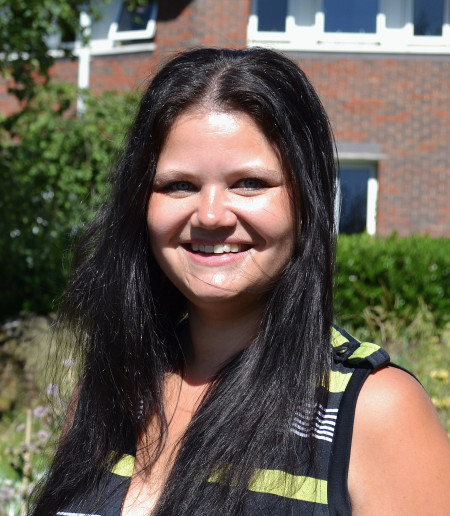
Professor Gemma Ryan-Blackwell
Co-Programme leader – nursing | REF UoA3 WELS Impact Lead | Co-chair for Nursing and Allied Health Professions Research Group
School of Health, Wellbeing & Social Care
gemma.ryan-blackwell@open.ac.uk
Biography
I am a registered adult nurse, qualified teacher, and Principal Fellow of the Higher Education Academy (Advance HE). I currently serve as Co‑Programme Leader for the BSc Registered Nurse Degree Apprenticeship, Faculty REF Unit of Assessment 3 Impact Lead, Co‑Chair of the Open Nursing and Allied Health Professions Research Group, and Senior Lecturer in Adult Nursing at The Open University.
My professional background spans pre-school, secondary, further and higher education teaching mathematics, biology, and health and social care, as well as roles in research management and both NHS and private healthcare across community and acute settings. I hold a Doctor of Health Science (Nursing), my research examined professionalism and social media. I also hold an MSc in Professional Education and PGCertHE from De Montfort University and a BSc (Hons) in Health & Social Care and PGCert in Advancing Healthcare Practice from The Open University. I have extensive experience in online and distance education across a wide range of academic levels.
Research Interests
My current research agenda builds directly on the foundations established in my master’s and doctoral studies, deepening my long-term exploration ofsocial media behaviours, and the evolving landscape of electronic and digital professionalism. Across this body of work, I examine how digital spaces shape professional identity, influence patterns of communication, and create new forms of opportunity and risk for learners, educators, and practitioners.
This sustained programme of research has also led to a significant focus on regulatory standards in both education and professional practice. I am particularly interested in how regulatory bodies adapt to rapid technological change, how professional guidelines evolve in response to emerging digital behaviours, and how institutions support compliance, accountability, and safe practice in increasingly complex online environments.
Unifying these themes is my broader aim: to understand and influence how digital ecosystems intersect with professional conduct, regulatory frameworks, and educational quality. Through this, my work seeks not only to generate insight but also to inform policy, strengthen regulatory practice, and enhance the digital professionalism of future and current practitioners.
My ongoing projects explore:
· Assessment and decision‑making around professional and unprofessional behaviours on social media
· Development of policy, guidance and interventions related to e‑professionalism
· Public engagement with professional regulation and Fitness to Practise processes
I was sub work‑package lead for the NIHR‑funded project ‘Witness to Harm, Holding to Account’, which explored the experiences of public witnesses in Fitness to Practise proceedings across all thirteen UK health and social care regulators. My strand of the project delivered a novel content and usability analysis of regulatory information for the public, producing recommendations to improve communication with individuals considering or raising a concern about a professional.
This work is now being disseminated through Open Societal Challenge funding, including the project ‘Improving How the Public Engage with Health and Care Professional Regulation Fitness to Practise Hearings’, and through a collaborative partnership with the Nursing and Midwifery Board of Ireland.
Leadership and Service
I am Co‑Chair and Cross‑Cutting Theme Lead for Professional Practice within the Open Nursing and Allied Health Professions Research Group. As REF Impact Lead for Unit of Assessment 3, I support multiple high‑quality impact case studies for REF 2029 and sit on the REF Uniy of Assessment 3 cross‑faculty management group.
I also contribute widely to school, faculty and university committees and serve as Vice Chair of a Health Research Authority (HRA) Human Research Ethics Committee – Northwest.
Projects
Validation & evaluation of a decision-making tool for assessing behaviours and incidents involving nurses on social media
PRISM: Professional Regulation In Social Media. AIM: Validate the A2A decision making tool to assist nurses, managers, academics and professional organisations to make consistent decisions about nursing related incidents and reported behaviours on social media. This will also serve to raise awareness of e-professionalism and manage risk. OBJECTIVES: I. Assess & validate the consistency of the decision-making tool through responses from nurses, nursing students and the public on a series of vignettes II. Evaluate the consistency and usability of the tool through qualitative and quantitative feedback III. Make recommendations for consistent assessment of professional and unprofessional behaviours on social media IV. Disseminate the tool to stakeholders through a range of methods
Publications
Book Chapter
e-professionalism & nursing education: The Awareness to Action (A2A) educational framework (2019)
Going 4D: Embedding the Four Dimensional Framework for Curriculum Design (2016)
Digital Artefact
DRIFT Project: Disseminating Research Information through Facebook and Twitter (2019)
Professionalism in Social Media - The 3C's rule (2017)
ADHD information on social media: An interview with Gemma Ryan (2014)
Journal Article
Identifying and addressing the challenges experienced by nursing associates (2024)
Postpositivist, critical realism: philosophy, methodology and method for nursing research (2019)
Philosophy & quality? TAPUPASM as an approach to rigour in critical realist research (2019)
Exploring public perspectives of e-professionalism in nursing (2019)
Introduction to positivism, interpretivism and critical theory (2018)
Evaluation of a drop-in clinic for young people with attention deficit hyperactivity disorder (2017)
An introduction to the origins, history and principles of ethnography (2017)
Enhancing Nursing Student Success: A Critical Realist Framework of Modifiable Factors (2016)
International perspectives on social media guidance for nurses: a content analysis (2016)
Evaluation of an educational website for parents of children with ADHD (2015)
A nurse-led sleep service for children and young people with disability (2014)
Online social networks for patient involvement and recruitment in clinical research (2013)
Other
DRIFT project, ADHD research on social media: An interview with Gemma Ryan (2014)
Presentation / Conference
Professionalism in Social Media: The 3Cs rule (2018)
What do nurses do in professional Facebook groups and how can we explain their behaviours? (2017)
Critical realist ethnography: from philosophy to the practice of research analysis. (2017)
ADHD One Stop Shop: a nurse-led, multi-agency drop in clinic for young people with ADHD (2016)
Presentation / Conference Contribution
Witness to Harm: Raising a concern by the public (2024)
Witness to Harm: Raising a concern by the public [symposia] (2024)
International perspectives on social media guidance for nurses: a content analysis (2015)
4Es of good degrees: what makes pre-registration nurses successful in achieving good degrees (2015)
Proposed research study into the age at death and cause of death in Gypsies & Travellers (2012)


