

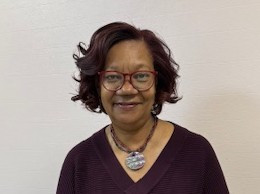
Dr Jenny Douglas
Professor Of Social Justice And Health Equity
School of Health, Wellbeing & Social Care
Biography
Professional biography
Professor Jenny Douglas is passionate about the health and wellbeing of Black women as evidenced through her research and public engagement. She has a PhD in Women’s Studies and completed her doctoral thesis on cigarette smoking and identity among African-Caribbean young women in contemporary British society. This research brought together two divergent research traditions: medical public health and health promotion approaches with sociological approaches to researching cigarette smoking. This interdisciplinary research approach brings together sociology, public health and women’s studies. Her commitment to comparative approaches finds expression not only in working across disciplinary and national boundaries, but also across theoretical and methodological traditions. Her research is both varied and wide ranging spanning 30 years on issues of race, health, gender and ethnicity. The key theme unifying her research and activism is intersectionality – exploring how racism, sexism and other intersecting oppressions affect particular aspects of African - Caribbean women’s health.
Jenny Douglas established and chairs the Black Women’s Health and Wellbeing Research Network. (www.open.ac.uk/black-womens-health-and-wellbeing) and her ambition is to establish a research institute on the health and wellbeing of black women. She is a contributing author to 'Inside the Ivory Tower'.
Jenny Douglas is a Professor of Social Justice and Health Equity in the Faculty of Wellbeing, Education and Language Studies at the Open University. She has a PhD in Women’s Studies from the University of York, an MA in Sociological Research in Health Care from the University of Warwick, an MSc in Environmental Pollution Control from the University of Leeds and a BSc (Hons) in Microbiology and Virology from the University of Warwick. As module lead of the K310 – ‘Public Health - Health Promotion and Health Protection’ she developed a public health module with an anti-racist and intersectional pedagogy. She is an honorary member of the Faculty of Public Health and is a director of the UK Public Health Register, a Trustee of the Foundation for the Sociology of Health and Illness.
Jenny is a member of the Research Advisory Committee of Wellbeing of Women. She is co-lead of The Black Women’s Health Manifesto Collective. She is a member of the Intersectionality Collective, Intersectionality Training Institute. Jenny is a Research Affiliate of the Institute for Intersectionality Research and Policy, Simon Fraser University, Vancouver, Canada and a Visiting Scholar in the Department of Psychology at The George Washington University, Washington D.C., USA.
Jenny is currently leading a research initiative funded by a Wellcome Trust Accelerator Award. Her work focuses on improving Black women's health and wellbeing in the UK, by building a comprehensive, intersectional evidence base.
Research interests
Jenny’s research has concentrated on changing policy, practice and approaches to research in health promotion and public health. She has published widely on public health, health promotion and black women’s health. She was a member of the African-Caribbean Women’s Mobility and Self-fashioning in Post-diaspora Contexts Network (Post-diaspora Network) funded by the Arts and Humanities Research Council. The network consists of twelve scholars from the UK, North America and the Caribbean, who come together to investigate how globalisation might work for African-Caribbean women migrants, even while acknowledging and addressing its exclusions and the production of inequalities.
Teaching interests
Health promotion and public health theory, practice and research; sociology of health and illness; ethnicity, ‘race’ and gender; health policy, international health policy, gender and health, global public health; intersectionality and health.
External collaborations
Jenny was member of the African-Caribbean Women’s Mobility and Self-fashioning in Post-diaspora Contexts Network (Post-diaspora Network) funded by the Arts and Humanities Research Council.
International links
Member of the Caribbean Studies Association.
Research Affiliate of the Institute for Intersectionality Research and Policy, Simon Fraser University, Vancouver.
Visiting Scholar in the Department of Psychology at The George Washington University, Washington D.C., USA.
Member of the International Union of Health Promotion and Education (IUHPE)
Member of the African-Caribbean Women’s Mobility and Self-fashioning in Post-diaspora Contexts Network (Post-diaspora Network)
Projects
Improving Black women’s health and wellbeing in the UK through the development of an evidence base
Whilst there is a large and growing evidence base on Black women’s health and wellbeing in the USA, the information on Black women’s health and wellbeing in the UK is limited and disparate. There are similarities between Black women's health in the USA and the UK, but also specificities based on the history, geography, migration patterns, housing circumstances and differences in health and social care services and structural racism. The aim of this proposal is to develop a robust evidence base on Black women’s health and wellbeing in the UK. The proposed programme of work comprises three parts: 1) Scoping review, 2) Development of an intersectionality-informed protocol for an empirical study on Black Women’s Health and wellbeing undertaking secondary data analysis on existing cohort studies; and 3) Undertaking a feasibility study on establishing a Black Women’s Health and Wellbeing Research Centre in the UK. Such a Centre will ensure that the evidence on Black women’s health and wellbeing can be brought together in one place and is accessible to future researchers, policymakers and practitioners. For the purposes of this proposal Black women are defined as African, Caribbean and Black Mixed Heritage women living in the UK.
Policy Research Unit in Maternal and Neonatal Health and Social Care
To produce high quality research to improve the care provided by the NHS to women, babies and families during pregnancy, birth and early childhood. We aim to reduce deaths and severe illness, and improve women’s and families’ experiences, through working in partnership with parents, policymakers, doctors and midwives.
Experiences of COVID-19 and recovery: learning from polyphonic voices for communities, policy makers and health and social care providers
The study aims to improve understanding of the ways in which patients from diverse communities have experienced COVID-19, provide an online resource as part of Healthtalk.org (to inform and support individuals and their families) and to co-produce flexible resources to support health and social care staff, communities and policy makers to 'build back better'.
Understanding and using family experiences of managing long Covid to support self
The study aims to improve understanding of the experience of long Covid in households with children and young adults, from diverse socio-economic and ethnic minority backgrounds. This understanding will be used to develop public-facing resources to support self-care, co-produce theatre-based workshops for schools, support communications in long Covid consultations and inform policy makers.
Lakes Estate Healthy Homes Pilot Project
Background The Lakes estate in Bletchley was built between 1968 and 1975 and by the time of this project many properties required refurbishment. Parts of the estate, comprising council-owned properties, were refurbished by Milton Keynes Council to create whole house efficiency through works to roofs, windows, doors, cladding and boiler replacements as required. At the same time, the public health team wanted to plan interventions based on the estate’s health needs, and information gathered form the effects of the refurbishments was to inform this planning. The OU team was required to: • Help to identify a purposive sample of households to represent a range of households on the estate. • Carry out a qualitative assessment of health and wellbeing, including people’s views about their housing and its impact upon their health, among a sample of households on the estate whose properties were to undergo refurbishment from early 2014. • Ascertain people’s needs and wants in relation to public health support services and improvements, and their preferences for delivery of these services. • Assess the extent of community capacity and social capital among Lakes estate residents. • Help to identify and then train and support volunteers from the estate to act as interviewers. • Revisit the households to undertake qualitative re-assessment of their health and wellbeing once the renovation works were complete, at least sic months after the completion of work to learn about the longer-term impact. • Report regularly to the reference group and produce reports on findings and recommendations at each stage. The research We aimed for a purposive sample of around 50 households, working with the public health team to to ensure representation from the different communities/social and ethnic groups/family structures living on the estate, as far as possible. We developed a semi-structured questionnaire to use with the households within face-to-face interviews in their homes, drawing on well established qualitative survey questions where possible to ensure that the validity of the questionnaire was commensurate with other comparable tools. The focus was on whole households, involving children as well as adults in groups interviews, where appropriate. We worked through the neighbourhood regeneration and neighbourhood engagement teams already working with residents of the Lakes estate who managed relationships with residents during the refurbishment. The timing of the research meant that stage one (baseline) interviews were carried out by the contracted OU team, but for the second stage (follow-up interviews), a small team of residents from the Lakes estate was recruited, trained and supported to take part in the interviews. They were paid and worked in pairs, usually comprising one academic and one community researcher.
Publications
Book
Public Health: Building Innovative Practice (2012)
A Reader in Promoting Public Health: Challenge and Controversy (2nd Edition) (2009)
A Reader in Promoting Public Health: Challenge and Controversy (2007)
Book Chapter
Black Women and Public Health in the UK (2022)
Black Women’s Health Still Matters (2021)
Working effectively with African Caribbean young women: an intersectional approach (2019)
An Intersectionality based framework for tobacco control (2019)
The struggle to find a voice on Black women's health: from the personal to the political. (2017)
Using evidence to plan and evaluate public health interventions (2012)
The rise of modern multidisciplinary public health (2009)
Promoting the public health: continuity and change over two centuries (2007)
Gauging the effectiveness of community-based public health projects (2007)
Addressing poverty and health (2007)
Making and changing healthy public policy (2007)
Researching the views of diabetes service users from South Asian backgrounds (2007)
In defence of a woman's right to choose: abortion, disability and feminist politics (2007)
Dirty whores and invisible men: sex work and the public health (2006)
Meeting the health needs of women from black and minority ethnic communities (1998)
Digital Artefact
Developing intersectionality- informed research methodologies (2020)
Journal Article
Editorial: Special edition ‘Race and Ethnicity’ (2021)
Presentation / Conference Contribution
Black women and public health in the UK: organisation and activism (2018)
The role of family and community in preventing cigarette smoking (2018)
Documenting Black Women’s Health Activism (2018)
Black Women’s Health in Europe (2017)
Developing an intersectionality based framework for health promotion (2016)
An Intersectionality based framework for tobacco control (2015)
Conducting focus group research with African-Caribbean young women on cigarette smoking (2015)


