

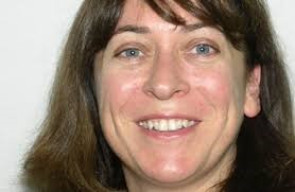
Dr Siobhan Campbell
Professor Of Poetry And Creative Writing Practice
Biography
Professional biography
I am an Irish poet and researcher in Creative Writing Practice working within a poetics of Social Literary Interventions and Arts Based Research. Educated at University College Dublin and at Lancaster University, I also pursued post-graduate study at NYU and the New School, New York. I joined the OU from Kingston University London where I was Associate Professor in English Literature and Creative Writing. I am the author of five collections of poetry and co-editor of the first commissioned book of essays on the work of Eavan Boland. I collaborate with other artists on community-based arts projects including Art at the Heart of the Peninsula (Peace IV-funded) and the British Council's Peace and Beyond project. My work has received awards in the National Poetry Competition and the Troubadour International Competition and is the recipient of an Arts Council award and the Templar Poetry Prize. I publish regularly in the literary journals of the US and the UK/Ireland including Poetry and The Hopkins Review (US) and Agenda and Magma Poetry (UK). I appear in the canonical anthologies of the past two decades including Identity Parade: New British and Irish Poets (Bloodaxe), Women’s Work: Modern Women Poets writing in English (Seren) and The Field Day Anthology of Irish Literature (NYU Press).
Research interests
Current research projects include Knowledge Transfer Partnerships with NHS Trusts in the Tees Valley and with Verbal Arts, Northern Ireland. Ongoing work with NGOs in Lebanon, funded partly through UNHCR, co-creates writing-based supports for human rights activists and social workers.
As a poet, I explore the place of the political poem in contemporary poetics and am interested in generating situations for the socially engaged poem to arise within new ethical frameworks that problematise perceived personal/political divides.
My research, in tandem with the mission of The Open University, combines social engagement and a poetics of activism. Emerging from my post-conflict poetry, and my research into creative writing with military veterans in the UK and USA, I developed Creative Expressive Writing methodologies that now form the basis of training programmes in several countries including Iraq and Lebanon and are in use with NHS frontline health workers. My workshop practices expand the range and possibilities of arts-based interventions and are designed to be sustainable and replicable, allowing their use even in contested arenas.
Projects, partnering with co-researchers in a variety of organisations, look at how participatory practice can enable participants to recognise their own personal potential as well as their potential for creating cultural cohesion. Partners include UNDP, Iraq, Participation and Practice of Rights, Northern Ireland, North Tees and Hartlepool NHS Trust, The Royal Trinity Hospice, London, and Beyond Borders, Scotland.
Selected Recent Publications:
Campbell, Siobhan (2026). Participatory Poetries Against Othering—Creative Writing and Social Literary Practice with Displaced Women in Lebanon. Humanities, 15(6), article no. 75.
Campbell, Siobhan and McEvoy, Mel (2026). Creating Space for NHS Voices – Creative writing with Frontline Healthcare Workers in the NHS: How emergent collective poems establish new ways of evaluation. Writing in Education, 97 pp. 52–57.
Campbell, Siobhan and Jensen, Meg (2025). Expressive writing and telling and participatory action research: developing a relational ethics of practice for story-based interventions in crisis settings. Journal of Poetry Therapy, 38(3) pp. 259–272.
King, Edmund G. C.; Haslam, Sara and Campbell, Siobhan (2025). Healing through Books: An Introduction. In: Campbell, Siobhan; Haslam, Sara and King, Edmund G. C. eds. A Hundred Years of Bibliotherapy: Healing through Books. London, UK: Routledge, pp. 1–26.
Teaching interests
I have been privileged to supervise English Literature and Creative Writing theses at MA, MFA and PhD levels. Interests include poetic ekphrasis, the stylistic and ethical considerations around life-writing/memoir and contemporary poetries and poetics. I have supported many student writers towards publication across a range of creative practice including poetry, eco-critical post-apocalyptic fantasy and the re-working of folklore and legend into stories that speak ‘truth to power’.
Recent Open Learn courses include ‘Crime fiction and the psychology of our relationship with villains’Collaborating with Open Psychology Research Centre; Co-written with Professor Zoe Walkington and Dr. Graham Pike. and ‘What happens to you when you read’ An ECW collaboration Co-written with Professor Zoe Walkington, Dr. Graham Pike, Professor Sara Haslam, Dr. Edmund King
Consistently engaged by the development of pedagogies which support a diverse range of distance students, I am actively working on the creation of materials for new level one courses and involved in planning a further interation of the OU MA in Creative Writing.
I am glad to hear from prospective students who wish to explore possible critical-creative projects at the above contact email.
External collaborations
Funded Projects
|
2026 PI on 'Co-creation of Creative Writing Interventions with frontline Healthcare Workers' in partnership with the Group Arts Council, University Hospitals Tees. Funded by NHS Charities and UHT
2025 Co-I on the Knowledge Exchange Connected5 (Northern Ireland Govt.)-funded project: The Immersive Online Storytelling for Welllbeing Project with Verbal, Derry; Belfast Met FE College and KMI at the OU.
2024 PI on ‘Creative Writing as a Psycho-Social support for frontline Health workers: developing an interactive self-support tool and training programme’. Funded by South Tees NHS Trust and Tees Valley Research Alliance: In an Open University KTV project, co-supported by the Cancer Care Alliance.
Co-I on ‘Conversational Media Supporting Group Intervention for Mental Health and Wellbeing’, a KTV comprising KMI at the OU; Verbal, Londonderry; In the Room (AI-interactive conversations). Higher Education Innovation Fund £24,554. |
|
|
|
PI on ‘Identity and Agency via Creative Writing Practice for GPs in the training period and beyond’ in association with extra-curricular committee, The Royal College of General Practitioners. PI on ‘Expressive Writing &Telling in Crisis: Addressing urgent needs in the Akkar Province, Lebanon.’ AHRC Global Challenges Research Fund. This funding was central to the Impact Case Study on this overall project for REF21. Funding: AHRC £140K pre-2024 Co-I on Psycho-social support for health-care workers after Covid 19: Creative Writing Strand (Italian, English, Arabic). In partnership with Corporate Social Responsibility: Viaro Ltd, Italy. Funding: (Viaro Ltd): £10K.
PI on ‘Creative Writing After Conflict: initiate, consolidate, sustain.’ A two-phase 12-month project with Syrian refugees via the NGO, Akkar Network for Development. Funding: AHRC Global Challenges Research Fund £40K .
PI on ‘Expressive Writing in Pressurized Environments’ working with Forgotten Veterans UK. Funding: AHRC Global Challenges Research Fund Grant £12,800.
PI on ‘Re-writing ourselves: Creative and Expressive Writing for Resilience with Military Veterans. In partnership with Veterans Outreach Support. Total Funding: £14,293 (Veterans Outreach UK - £4000; Royal Navy & Royal Marines £5000, Open University PVC Research and Innovation Fund £5293).
Co-I on Countering Violent Extremism (CVE) Gulf Region Fellowship programme: Use of writing-based interventions in prevention of radicalisation. Funder: Foreign & Commonwealth Office via Stabilisation and Recovery Network.
Co-I on ‘The implications of Life Story in tackling Stigma after Sexual Violence’. The Foreign and Commonwealth Office Against Stigma project: researching expressive writing methodologies.
Co-I on ‘Expressive writing: countering extremism: expressive writing in prevention of radicalisation. Findings presented at the GCC Countering Violent Extremism Conference, 2017. Outputs include a half hour film. £10K UK Cabinet Office Grant.
PI on ‘Beyond do no harm: Life Writing in Post-Conflict Resilience-Building’ Funded by Beyond Borders (Charity, Scotland) with FCO and the NGO, INMAA, Kirkuk. Outputs include chapter in Research Methods for Auto/biography Studies, (Routledge) and The Expressive Life Writing Handbook
|
Projects
Immersive Online Reading for Mental Wellbeing
The project builds on the reading group interventions for mental health and well-being developed by Verbal. Verbal’s reading programmes have proven successful in improving mental health, but their outreach is limited by the resources needed to deliver a six-week programme of in-person reading groups. While effective, the in-person and group settings cannot reach the scale needed to address the ongoing crisis in mental health. The project will develop a remote version of the group bibliotherapy intervention and produce a proof of concept (PoC) that remediates Verbal's existing, successful bibliotherapy group programme. This project will instead tackle the challenge of providing a comparably effective intervention while retaining the benefits of group reading and discussions but through remote individual sessions that can reach population-level impact. The proposed approach builds on the positive results of a previous pilot — and a collaboration between the OU and Verbal — with interactive videos to train teachers on bibliotherapy. The project will design an interactive intelligent service that delivers reading online sessions and structured discussions with the following objectives: (O1) Including people unable or unwilling to participate in person due to work or caring responsibilities or in connection to social anxiety, poor mobility or other material and health conditions. (O2) Developing a scalable online service for mental wellbeing available for both individuals and organisations that wish to support their communities. (O3) Developing an off-the-shelf programme for healthcare organisations. The PoC will be developed through a co-design process led by the OU and with the creative contribution of Belfast Met. The co-design will be structured around a set of design choices and hypotheses about how to recreate the necessary conditions for the intervention to be effective. Those design choices and hypotheses range from how to prompt the level of immersion through, e.g., pre-recorded reading or the introduction of ambient noise, typical of social reading. Similarly, the project will find and test solutions for eliciting reflection and suitable forms of elaboration and engagements as technically viable, privacy-preserving, effective alternatives to the group discussion of in-person sessions. The co-design process will provide the conditions for knowledge transfer between partners, teaching and learning by addressing the complex interconnection between the technical, design and methodological aspects of the remote intervention and digital delivery platform. The results will be: (a) the PoC of the technology (b) the related protocol of the intervention (c) the business model. The mock-up will be used to commission the development of a new dedicated Verbal portal and service to be further tested and validated and, ultimately, brought to market. The protocol and business model will support a business development initiative to sell subscriptions to individuals and the solution to healthcare providers and organisations within the UK and abroad. Finally, Verbal will acquire the competencies to embed the use of digital technologies in the design of their intervention; Belfast Met academic will acquire experience with real-life digital innovation; OU researchers will learn how to remediate through digital media the key experiential factors involved in mental health interventions.
Publications
Book
A Hundred Years of Bibliotherapy: Healing through Books (2025)
Book Chapter
Healing through Books: An Introduction (2025)
Galsworthy’s First World War Writing as Self-Care (2025)
The American Library Association, 'Bibliotherapy' and the First World War (2025)
‘Bygone canon, bygone spleen’: Richard Murphy as a conflict poet in The Battle of Aughrim (2019)
‘Bygone canon, bygone spleen’: Richard Murphy as a conflict poet in The Battle of Aughrim. (2019)
Eavan Boland and the development of a poetics: ‘It may be beauty/but it isn’t truth’ (2017)
Journal Article
New Poetry | Filíocht Nua (2021)
Writing-based interventions: from Communities of Practice to Life Stories (2020)
Writing in a Time of Violence: Padraic Fiacc’s Demotic Aesthetic (2020)
Crossing the Lines: Borders, Transgressions, and a Spot of Smuggling (2017)
Presentation / Conference
The Psychology of our Relationship with Fictional Villains (2024)
Conversational Media for Inclusive Access to Mental Health Interventions for Schoolchildren (2024)
Presentation / Conference Contribution
Connected Collaborations: Remediating Immersive Reading for Mental Wellbeing through AI (2026)
Thesis
From There to Here: Writing in a Time of Violence: A Creative and Critical Thesis (2015)


